- By Sam Singh
- Updated Oct 25, 2026

YouTube makes it look easy. Your friends think it’s just "a heavy table."
But here’s the truth: moving a pool table is like defusing a bomb—blindfolded—on a skateboard. One wrong move and you're looking at shattered slate, torn felt, dented floors, and weeks of regret.
If you’re thinking about doing it yourself, read this first. We’ll break down what actually goes wrong during a DIY pool table move—and why professionals pool table removalists exist for a reason.
1. The Slate Myth: It’s Not One Piece, and It’s Not Forgiving
Many people don’t realise that most high-quality pool tables have 3-piece slate beds, each weighing 100 to 250 kilos. These slabs are incredibly brittle despite their weight.
What goes wrong:
- Dropping one piece just an inch can cause cracks or chips that ruin the table forever.
- Uneven reassembly will warp gameplay—balls won’t roll straight.
- Lifting slate without proper padding or grip? Say hello to smashed toes or broken tiles.
Replacing a single cracked slate can cost you more than the table’s worth—if you can even find a match.
2. Frame Damage: Your Table Isn’t Built to Be Dragged
.jpg)
Pool tables are designed to sit, not to be shoved or tilted. The solid wood frame might look tough, but it’s joined together with delicate components that can easily loosen or break under the stress of incorrect handling.
What goes wrong:
- Legs snap when weight is unevenly shifted.
- Bolts loosen, joints split, or alignment gets ruined permanently.
- You might warp the entire structure trying to turn tight corners or narrow stairs.
DIY Fail Scenario: Many DIY movers try to move the table fully assembled. This increases risk by tenfold. Professional removalists always dismantle the table completely before moving.
3. Tools? What Tools?
Moving a pool table isn’t just about muscle—it’s about precision tools you likely don’t have lying around in your garage.
What you actually need:
- Power drills with custom bits for disassembly
- Heavy-duty moving dollies (not your average furniture wheels)
- Slate lifters and levelers
- Felt removal tools and staple pullers
- Industrial-strength straps and padding
What goes wrong:
Using a screwdriver and guesswork often leads to stripped bolts, ruined felt, and damaged slate edges.
4. Re-felting = A Nightmare Without Skill
Let’s say you successfully dismantle and move everything. Now comes the tricky part: reassembling and re-felting the table.
What goes wrong:
- Uneven felt = unpredictable ball rolls
- Improper tension causes bubbling or tearing
- Staples or glue showing through? That’s a look no one wants
- Even minor misalignments can ruin gameplay.
DIY Tip: Hiring someone to fix a bad felt job costs double compared to getting it done right the first time.
5. You Could Wreck Your Home (Yes, Seriously)
Moving a pool table through tight spaces without damaging your house is nearly impossible without planning.
What goes wrong:
- Gouged hardwood floors
- Cracked tile or vinyl
- Holes in plaster walls
- Scraped door frames
Imagine, if you’re navigating a tight hallway, and the leg of your table catches the skirting board. Now you have both a broken leg and a renovation job.
6. You Could Get Seriously Injured

Let’s not sugarcoat this—pool tables are dangerous to move if you don’t know what you're doing.
Common DIY injuries:
- Herniated discs and back strains
- Crushed fingers and toes
- Pulled muscles
- Accidental drops causing bruises or worse
This isn’t just a “tough job.” It’s a high-risk activity for people without training and gear.
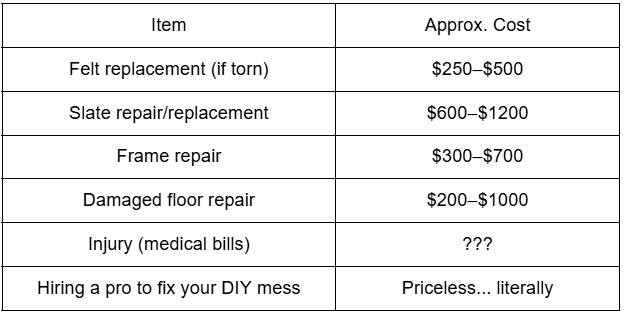
7. The Hidden Costs You Don’t Expect
You might think you’re saving money by doing it yourself—but here’s a breakdown of what often ends up costing more:
8. Insurance Might Not Cover You
Here’s a scary fact: If you damage your table or your house while moving it yourself, most home insurance policies won’t cover it.
But when you hire a professional pool table removalist, the move is typically covered under their liability insurance.
If anything does go wrong, you’re not the one paying for it.
9. Time Drain: It’s Not a One-Hour Job
Even with 3 people helping, moving a pool table safely can take 4–6 hours, not including the travel time and reassembly.
If you’re trying to move house, that’s a serious delay—and one that usually ends in frustration.
What goes wrong:
- Miscommunication with helpers
- Incomplete disassembly
- Rushing = mistakes = damage
10. DIY Doesn’t Add Up. Professional Help Does.
When you add up the risk, tools, time, damage potential, and sheer stress—doing it yourself rarely makes sense.
Hiring a professional pool table removalist means:
- The right tools
- The right team
- The right insurance
- A flat, predictable cost
- Peace of mind
You wouldn’t DIY a car engine rebuild if you’re not a mechanic. So why risk a luxury item like a pool table?
Don’t Let Confidence Cost You
You must be thinking it is easy!
But when it comes to pool tables, the answer is: very hard, very risky, and very expensive if you get it wrong.
If your table holds memories, value, or simply deserves better than cracked slate and crooked felt—leave the move to the pros.
