- By Sam Singh
- Updated Oct 27, 2026
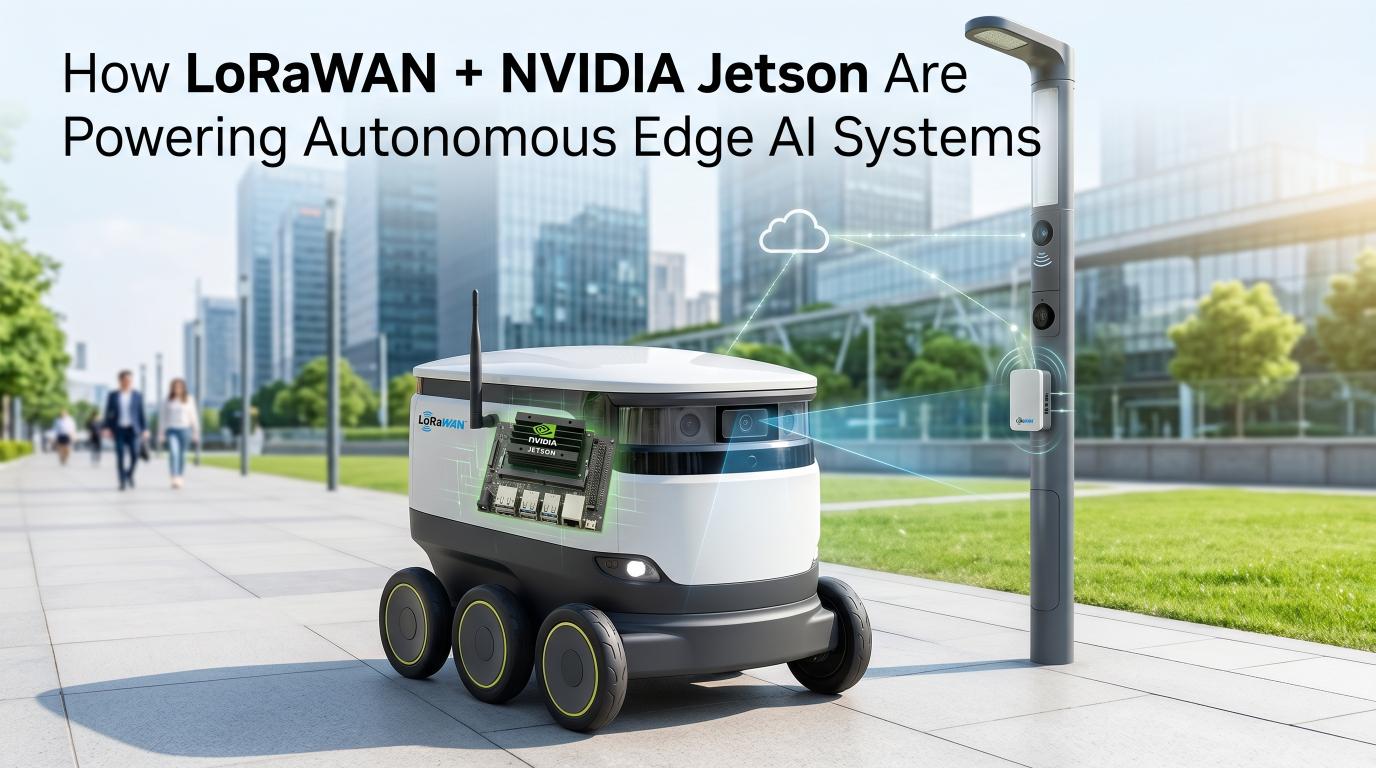
Right now, most IoT systems can collect data. They can tell you the temperature, detect motion, or track a device. But here is the problem. They only collect and send data. They do not think.
A smart system should not just send information. It should understand it and act on it instantly. This is where edge AI comes in.
When you combine LoRa & LoRaWAN with NVIDIA Jetson, your system stops being just a data collector. It becomes intelligent. It can make decisions on its own, without waiting for the cloud.
This is the difference between a system that watches and a system that reacts.
What is LoRa & LoRaWAN in simple terms
LoRa stands for Long Range communication. It is a way for small devices to send data over long distances using very little power.
LoRaWAN is the network that connects these devices. It acts like a bridge that helps sensors talk to gateways and then to systems that process the data.
Think of it like this
- Sensors are like messengers
- LoRa is the road they travel on
- LoRaWAN is the system that manages the traffic
The best part is that these sensors can run for years on small batteries and still send signals from far away places like farms, factories, or forests.
But there is one limitation. LoRa & LoRaWAN can send data, but they cannot understand it.
What is NVIDIA Jetson and why it matters
NVIDIA Jetson is a small but powerful computer designed to run AI programs. It can process images, detect objects, and make decisions in real time.
Instead of sending data to the cloud and waiting for a response, Jetson can think on the spot.
This is called edge AI. The intelligence is placed right where the data is created.
So instead of waiting seconds or minutes, your system can react in milliseconds.
The full system architecture explained step by step
Now let us understand how everything works together in a real system.
Step 1 Sensors collect data
Sensors are placed in the environment. These can be temperature sensors, motion detectors, cameras, or gas sensors.
They continuously observe the surroundings and collect raw data.
For example, a motion sensor detects movement in a warehouse.
Step 2 LoRa nodes send the data
The sensors are connected to LoRa nodes. These nodes send the data wirelessly using LoRa.
Because LoRa uses very little power, these nodes can work for a long time without needing frequent charging.
The data travels over long distances without using WiFi or mobile networks.
Step 3 Gateway receives the signals
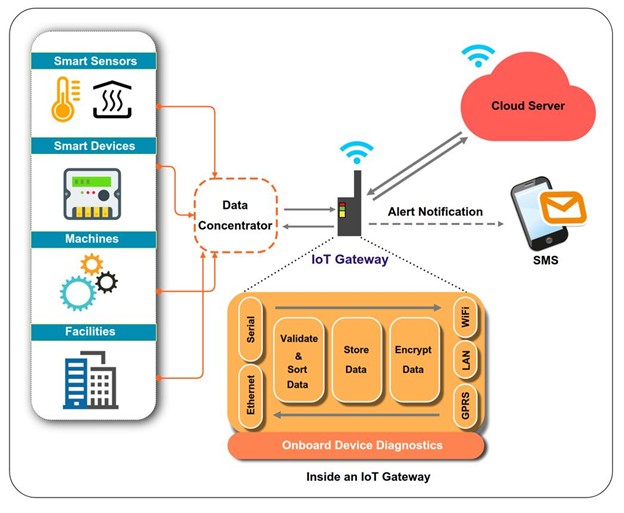
The gateway acts like a receiver. It collects data from many LoRa nodes at once.
Instead of sending everything to the cloud, the gateway passes the data to a nearby processing unit.
This is where things get interesting.
Step 4 NVIDIA Jetson processes the data
The gateway sends the data to an NVIDIA Jetson device.
Now the system becomes smart.
Jetson runs AI models that can analyze the incoming data. It can recognize patterns, detect problems, and decide what to do next.
For example
- If a camera detects a person in a restricted area, Jetson can identify it instantly
- If a sensor detects abnormal temperature, Jetson can recognize it as a risk
Step 5 AI inference and real time decisions
This is the most powerful part of the system.
AI inference means the system uses learned patterns to make decisions.
Instead of sending data to the cloud and waiting, Jetson takes action immediately.
It can
- Trigger an alarm
- Send a notification
- Turn on a machine
- Store only important data
All of this happens at the edge. There is no need for constant internet connection.
Why edge AI changes everything
Traditional IoT systems depend heavily on the cloud. Data travels far, gets processed, and then comes back as a response.
This creates delays.
With edge AI using NVIDIA Jetson, everything happens locally.
This gives you three major advantages.
- First is speed
Decisions are made instantly
- Second is reliability
The system works even without internet
- Third is efficiency
Only important data is sent, saving bandwidth and cost
Real world example you can understand easily
Imagine a smart farm.
Sensors are placed across the field to monitor soil moisture and temperature. These sensors send data using LoRa.
The gateway collects this data and sends it to a Jetson device placed nearby.
Jetson analyzes the data and decides when irrigation is needed.
Instead of sending all data to the cloud, it directly turns on the water system when required.
This saves water, time, and effort.
The system is not just collecting data. It is taking action.
The future of autonomous systems
We are moving towards systems that can operate on their own.
- Factories that detect faults before machines break
- Cities that manage traffic in real time
- Security systems that respond instantly
All of this becomes possible when LoRa & LoRaWAN handle communication and NVIDIA handles intelligence.
This combination creates systems that are fast, efficient, and independent.
Final thoughts
If your system only collects and sends data, it is incomplete.
Data without understanding is just noise.
When you add edge AI with NVIDIA Jetson to a LoRa & LoRaWAN network, your system becomes truly smart.
It does not wait. It reacts.
And that is the future of technology.
Because in the end, a system that cannot think is just watching.
